

Be more disco ball
Last week. I manged to squeeze in a morning run after dropping the kids off on the school run.
Headphones on. Empowerment playlist playing (thanks DJ Flourish).
Space to breathe, think and just show up for me.
There’s something about having that space that gives my brain permission to wander. And somewhere between the running, the music and my usual ramblings, as it usually does, I had a blog post forming in my head.
Perhaps that's what these ramblings are becoming. A space to reflect on what I'm experiencing, what I'm learning about myself, and ultimately, what all of that means for my practice.

Because the last couple of weeks have given me plenty to think about.
Last week, I led ADHD training for a fantastic team of staff.
They were engaged, curious and, most importantly, I could feel their willingness to try something different.
I felt it even more at the end of the session, when people came up to me individually and asked variations of:
“What would you try for this young person?”
I loved those conversations.
Because they knew the child.
They weren't asking me to magically provide an answer about a young person I'd never met. They were bringing their knowledge of that child and combining it with a willingness to think differently.
They wanted another idea.
Another possibility.
Another way of understanding what might be happening.
Ultimately, they wanted to make that young person's world a little bit better.
And isn't that so much of what this work is about?
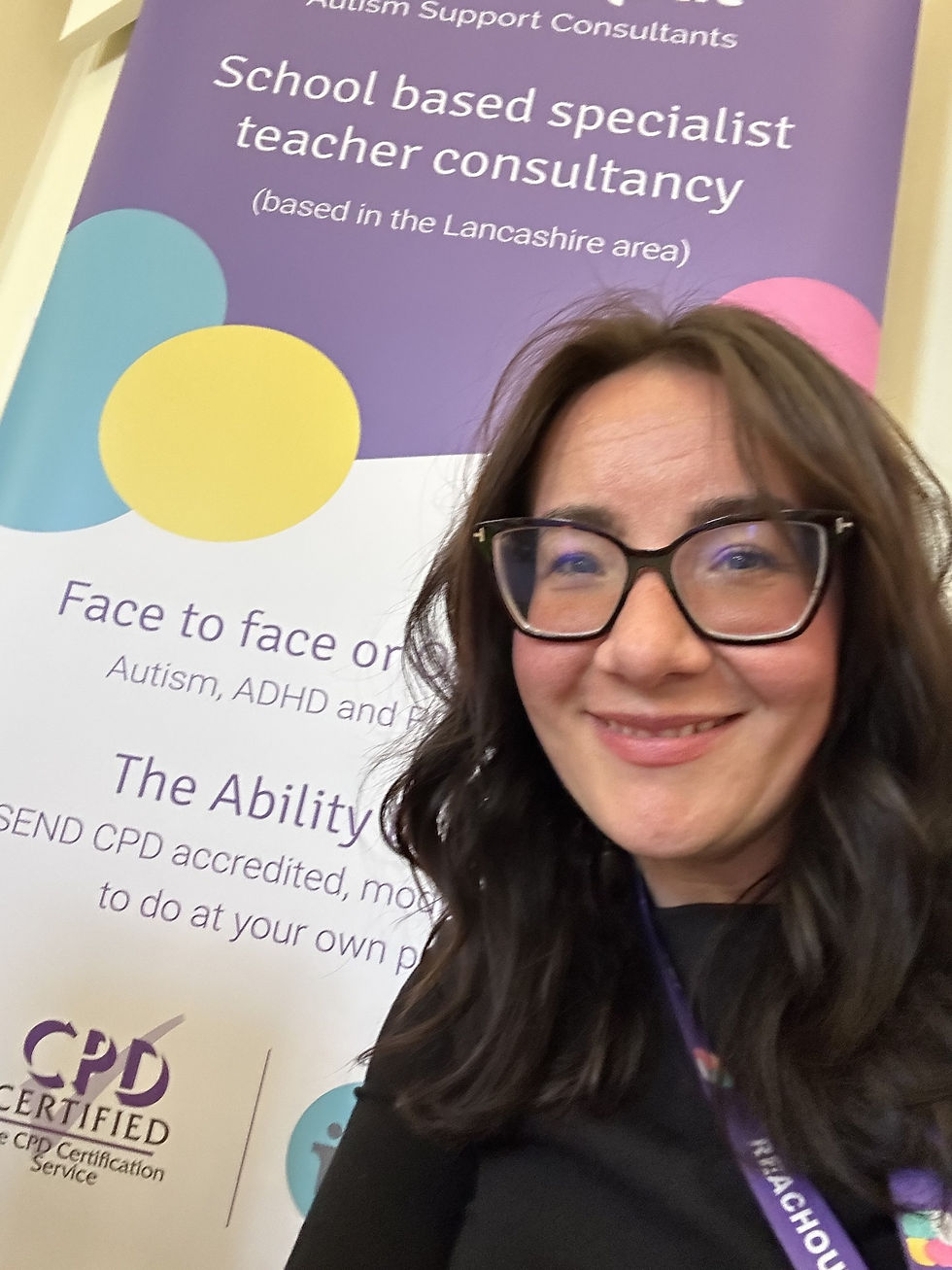
The day before, via Reachout ASC, I had the pleasure to attend and present a workshop on PDA at New Horisons residential care saff team day gave me lots to reflect on.
They had booked Nick Barwick as a keynote speaker and he bravely share his story.
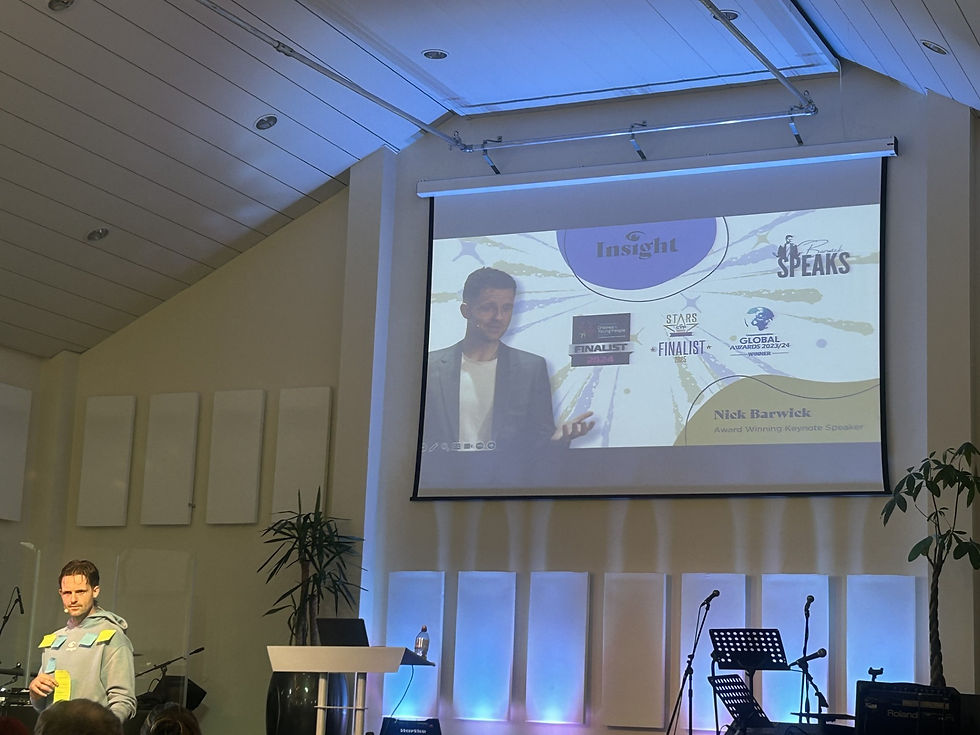
A story where life shattered and the path didn’t unfold as perhaps anyone might have imagined. But what stayed with me was what came afterwards.
Nick used his experiences to help shape the future of tomorrow through coaching, training, public speaking and a fantastic service that opens up possibilities for children and young people who have lived experience of the care system.
There is something incredibly powerful about taking what could have broken you and using it to create something that might make a difference for somebody else.
And then, completely separately, there was the disco ball.
A couple of days ago, I bought myself a little disco-ball pin.

And I’m going to wear it with pride.
Because when you think about it, a disco ball is made up of lots of little pieces.
Pieces that, individually, might not look like very much. Pieces that could even look broken.
But bring them together and something happens.
They catch the light.
They shine.
They reflect that light outwards and change the space around them.
And I started thinking:
What if we could all be a little bit more disco ball?
That thought feels particularly relevant to where I am right now.
The last two years have taken me on quite a journey of self-discovery. I’m learning more about my own wiring, my social anxiety and some of the core beliefs that became embedded through my own experiences of school.
I’m still on that journey.
Still learning about myself.
Still working through some of those beliefs.
But I’m also beginning to recognise that those experiences are part of what I bring to my practice and consultancy.
I bring my professional knowledge, but I also bring the lived voice of my experiences.
I bring my own experience of school.
I bring being a mum.
I bring being an auntie, watching children I love navigate the education system right now.
And perhaps all those different pieces are part of my own disco ball.
They influence one absolute belief that sitsunderneath so much of what I do: hey influencthe one
Every child deserves to feel valued.
Every child deserves to feel that they have a voice.
Every child deserves an adult behind them being their cheerleader.
The thing is, we can’t afford to miss any child.
So what does “be more disco ball” mean back in the classroom?
For me, reflection only really matters if it changes something about what we do next.
When I stand in front of a group of professionals delivering training, I'm not expecting one presentation to change a child's world overnight.
I am thinking about the one small difference somebody in that room might make afterwards.
And maybe it starts with three things.
1. Be there for the child
Sometimes the most powerful thing we can offer isn't a strategy.
It's us.
An adult who notices.
An adult who listens.
An adult who remains curious when things get difficult.
An adult whose actions communicate:
I see you.I value you.Your voice matters.And I'm still here.
We don't necessarily know everything a child carries with them when they walk through the classroom door.
But we can influence what happens next.
We can be their cheerleader.
2. When things go wrong, think restorative, not simply punitive
Behaviour tells us something.
Dr Ross Greene's phrase captures something I think is incredibly important:
“Kids do well if they can.” That creates such an important shift.
From:
“Why won't this child do it?”
to:
“What is getting in the way of this child being able to do it right now?”
Restorative doesn't mean ignoring what has happened.
It means retaining the relationship and looking towards understanding, repair and what might help next time.
It means remembering that a difficult moment does not have to define the child.

3. Lead with empathy and problem-solve together
Interestingly, I found myself talking about exactly this later yesterday with the same residential care staff when we were discussing PDA.
Start with curiosity.
What's happening for this young person?
What's making this difficult?
What are they trying to communicate?
What might we do differently?
And crucially:
How can we involve them in finding a way forward?
That resonates strongly with Dr Ross Greene's Collaborative and Proactive Solutions approach. The PDA Society describes this as working with the child rather than imposing a solution, listening empathetically to the child's concerns, sharing the adult's concern and then working together towards a solution. And suddenly I'm back to those conversations after my ADHD training.
“What would you try for this young person?”
What they were really demonstrating was curiosity.
Not “How do I make this child behave?”
Not “What consequence should I use?”
But:
“I know this young person. I care about them. This isn't working, so what else could we try?”
How powerful is that?
Because sometimes changing the path begins with an adult being willing to change their approach.
One small difference
That's why I do what I do.
One interaction.
One adult choosing curiosity over judgement.
One moment of empathy.
One repair when things have gone wrong.
One adaptation that means a child can participate.
One adult who decides to ask “What's going on?” rather than “What's wrong with you?”
One child discovering that somebody is genuinely in their corner.
We can look at those things and think they're tiny.
But what if they're not?
What if that one small difference changes the direction of someone's path?
So last week, as I ran, I had songs like When Love Takes Over, Thy Be Done and Sing It Back coming through my headphones, and I felt empowered.
Empowered to write.
Empowered to keep showing up.
Empowered to use my voice.
Then a friend sent me a message about October being a month of abundance, happiness and a little bit of magic.
Perfect timing.
A new month.
And I'm excited.
I'm excited about where BalancED might go.
I'm excited about the opportunities and experiences being put in front of me.
I'm excited to keep sharing my knowledge, my lived experience, my passion and my voice.
Not because I think I have all the answers.
Quite the opposite.
I think some of the greatest changes happen when we're curious enough to acknowledge that we don't have all the answers.
And willing enough to ask:
What could I try differently?
Maybe our lives don't always take the path we imagined.
Sometimes things shatter.
Sometimes we have to put pieces back together in completely different ways.
But those pieces don't have to recreate exactly what was there before.
They can become something new.
Something that catches the light.
Something that reflects it towards somebody else.
And perhaps that is my October reminder, both personally and professionally.
I don't have to illuminate the whole room.
Neither do you.
Sometimes we just need to catch a little bit of light and reflect it towards someone who needs it.
And if enough of us do that?
Well...
maybe we can all be a little more disco ball. 🪩✨



Comments